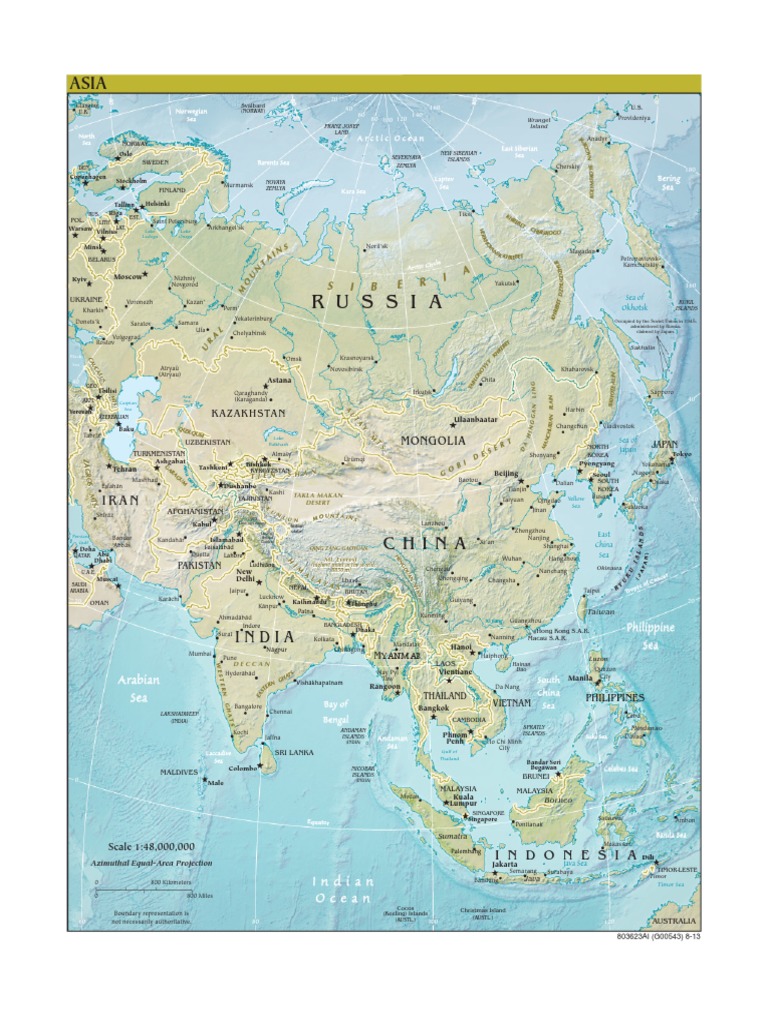
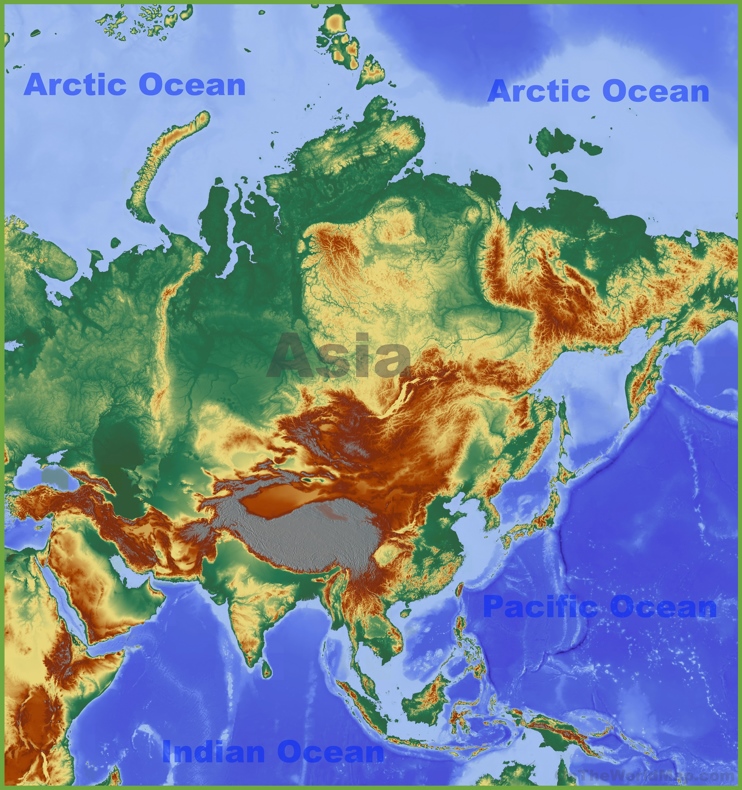
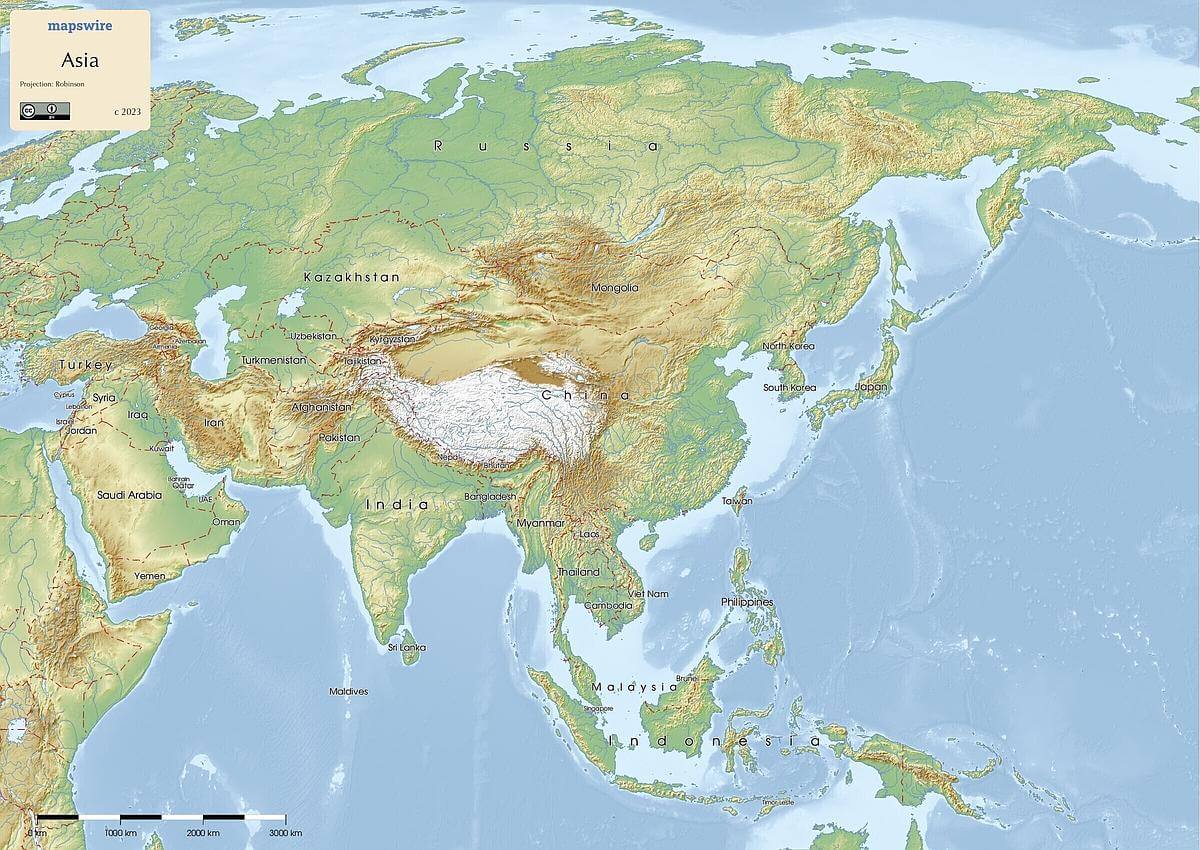
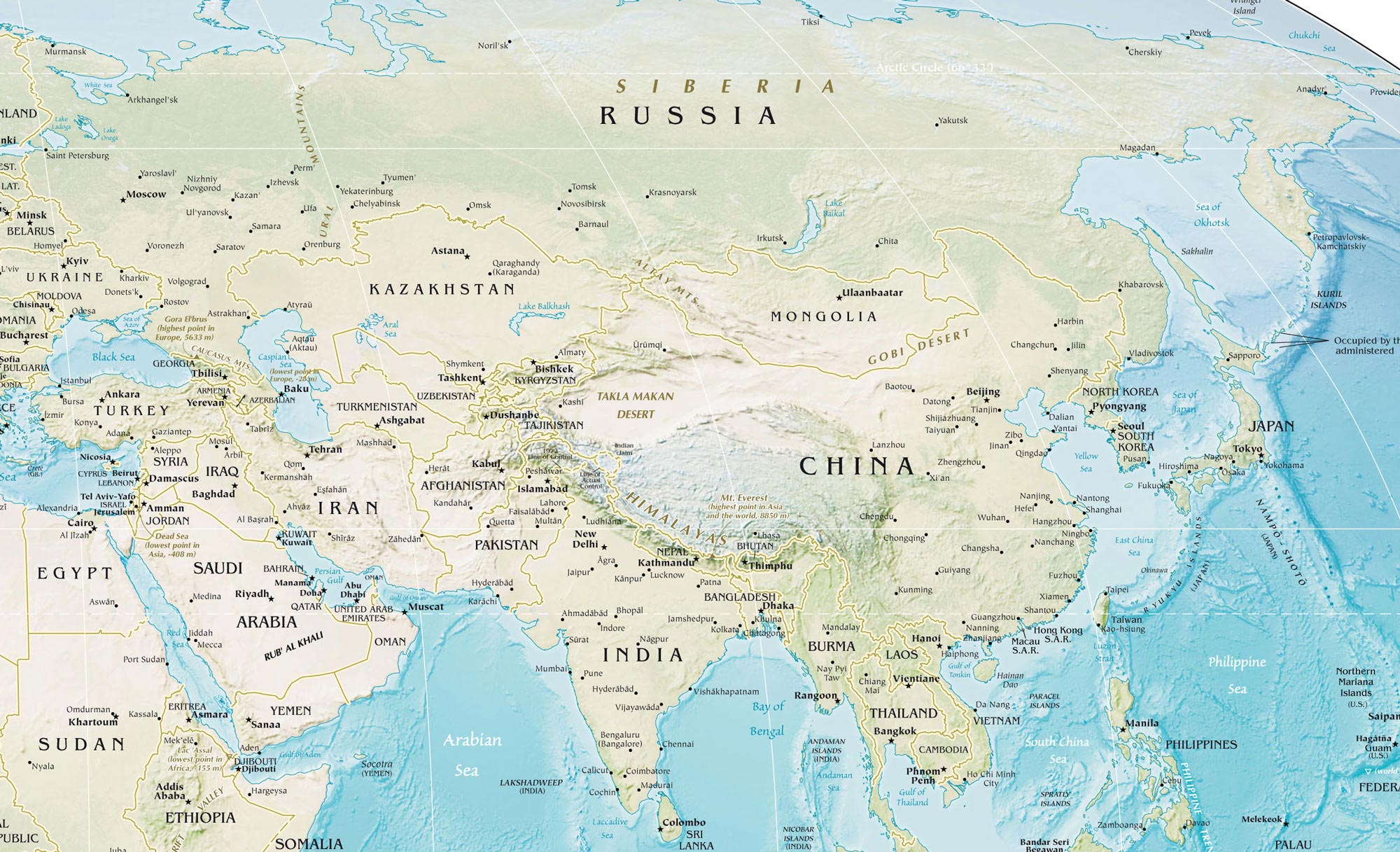
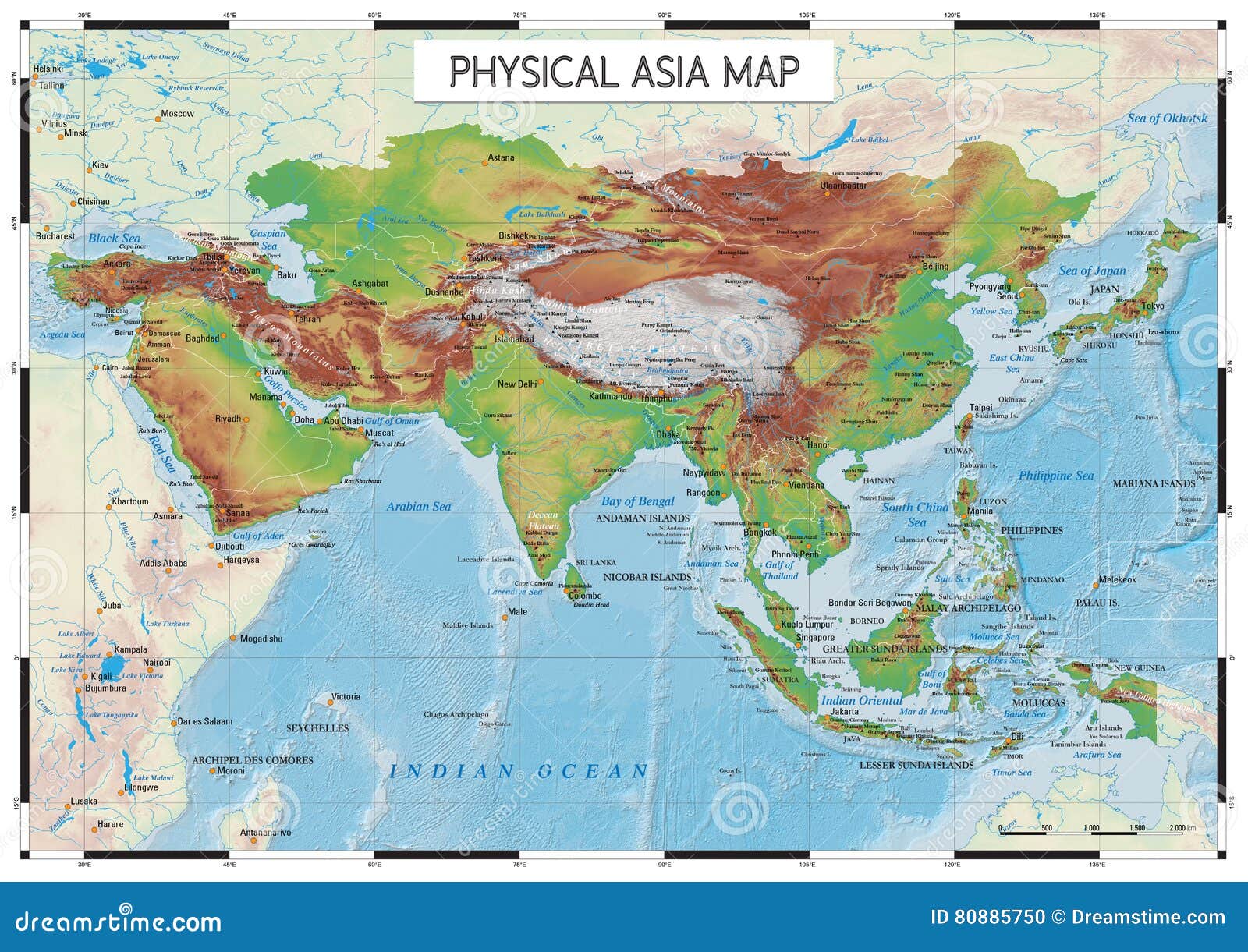
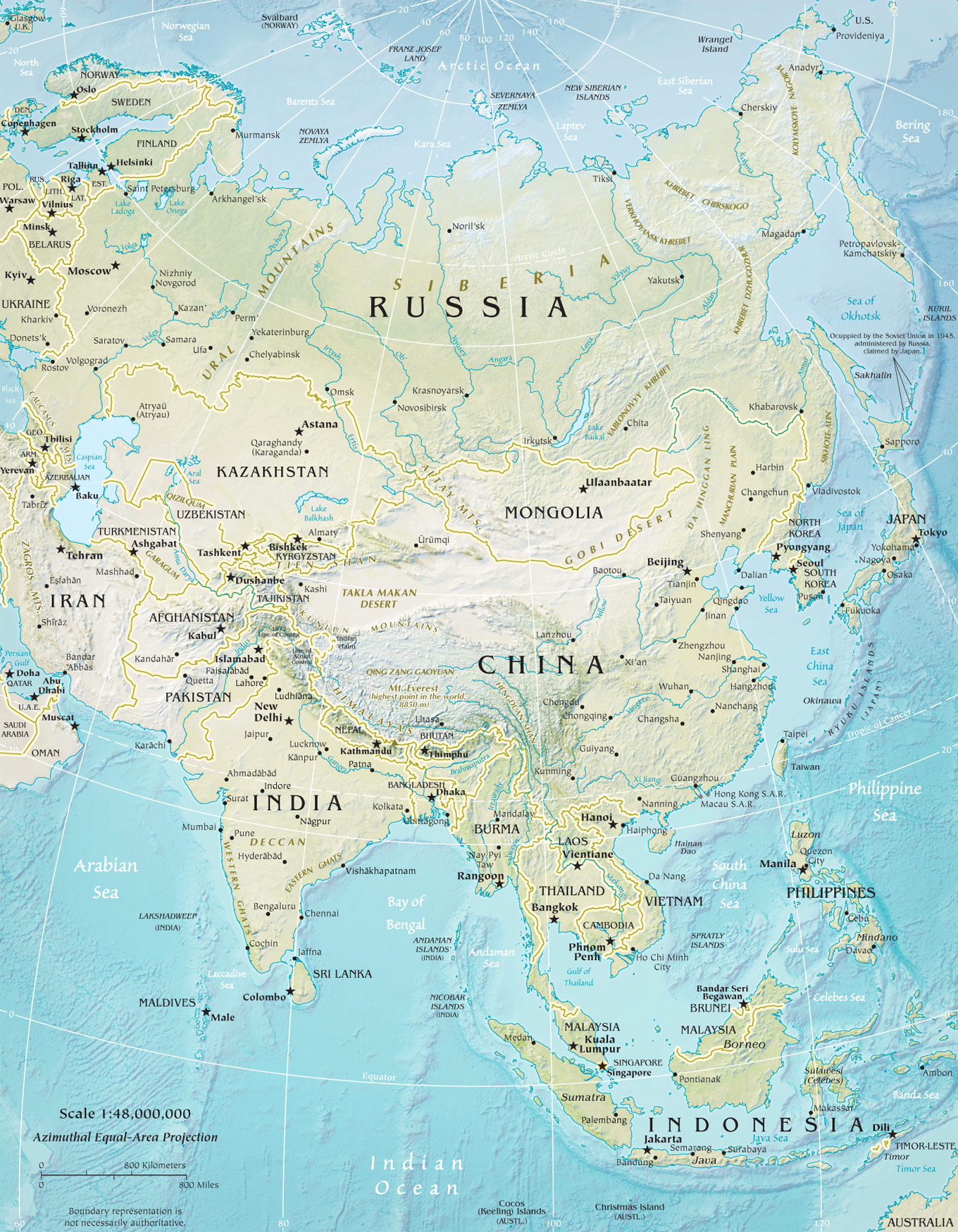
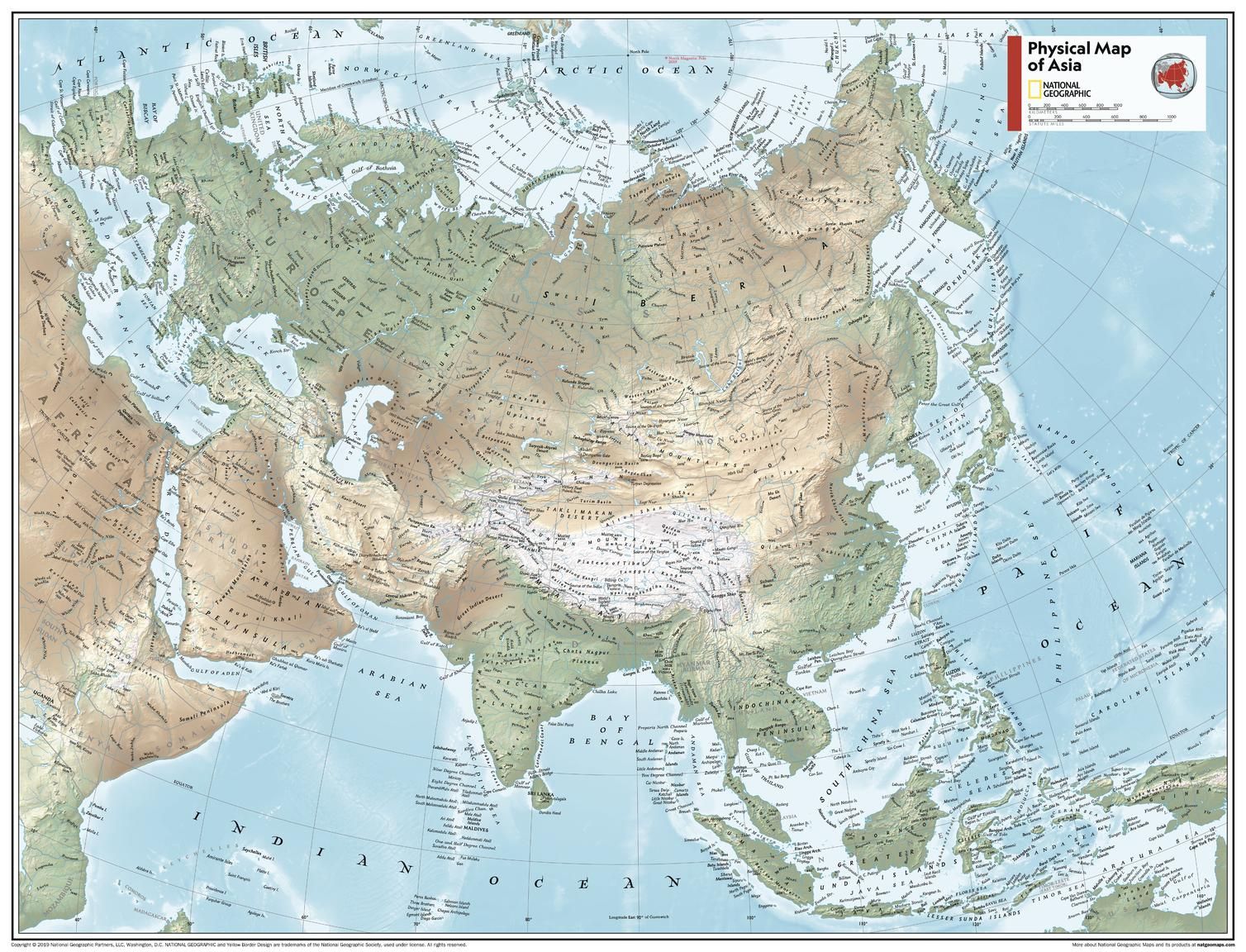
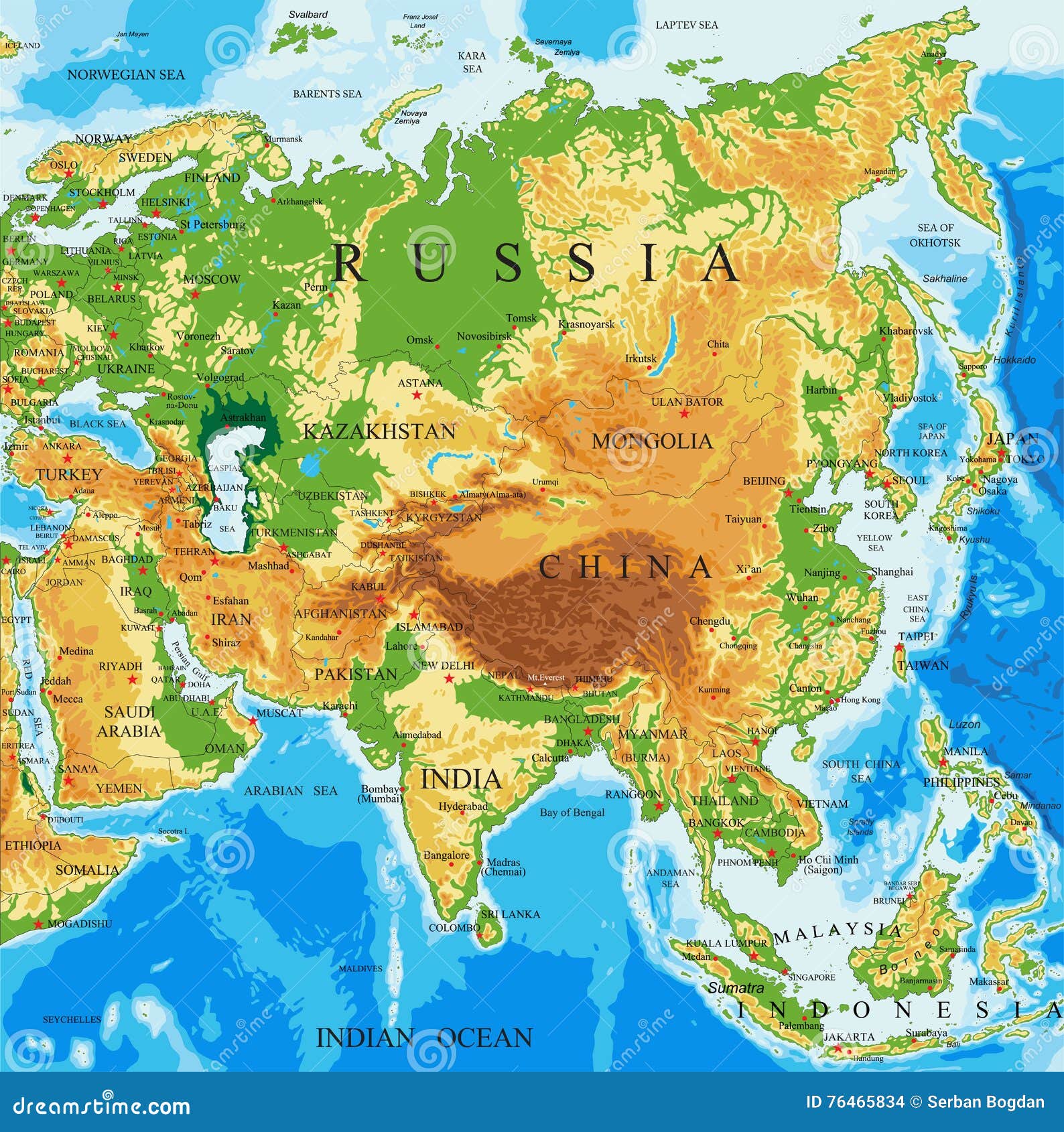
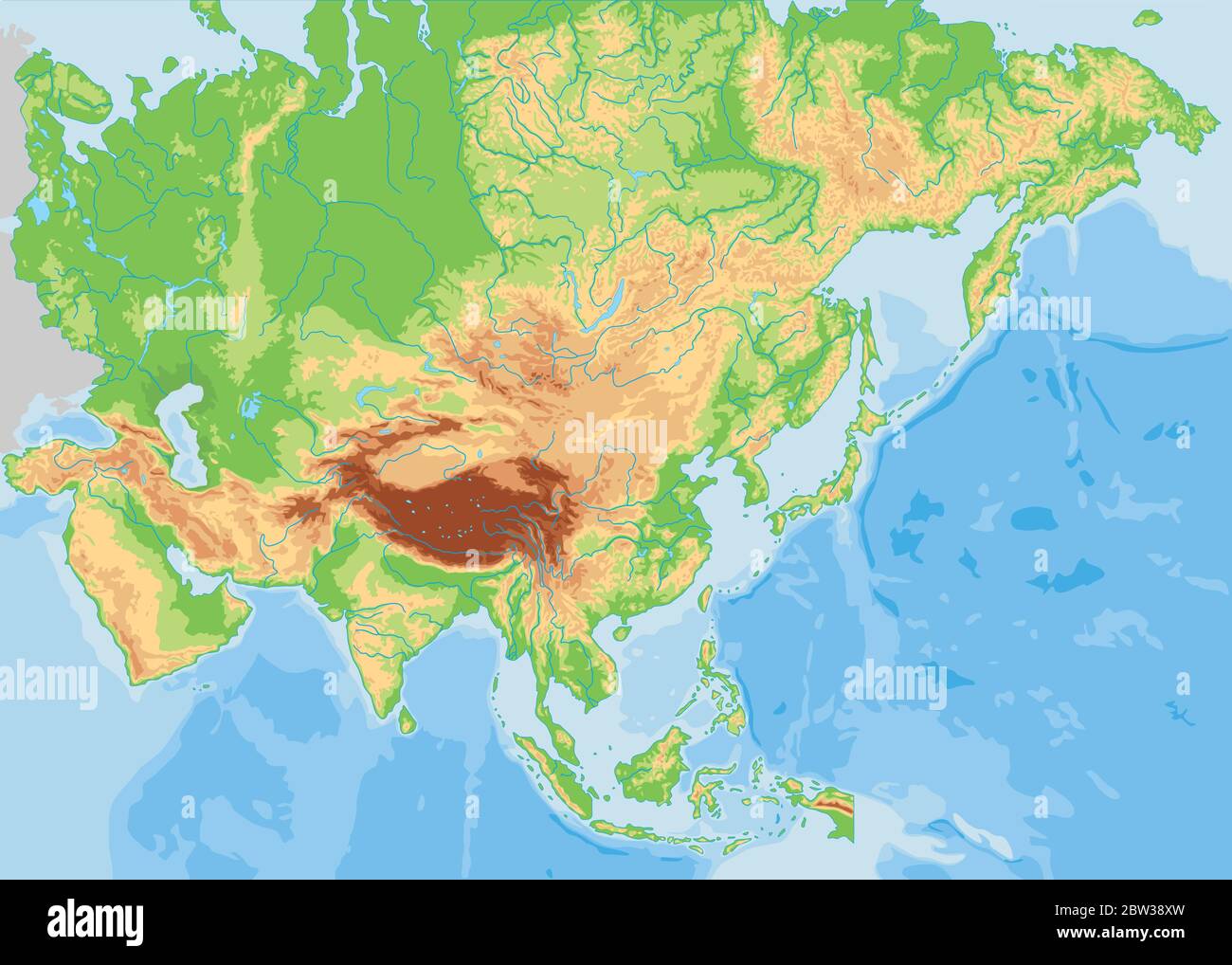
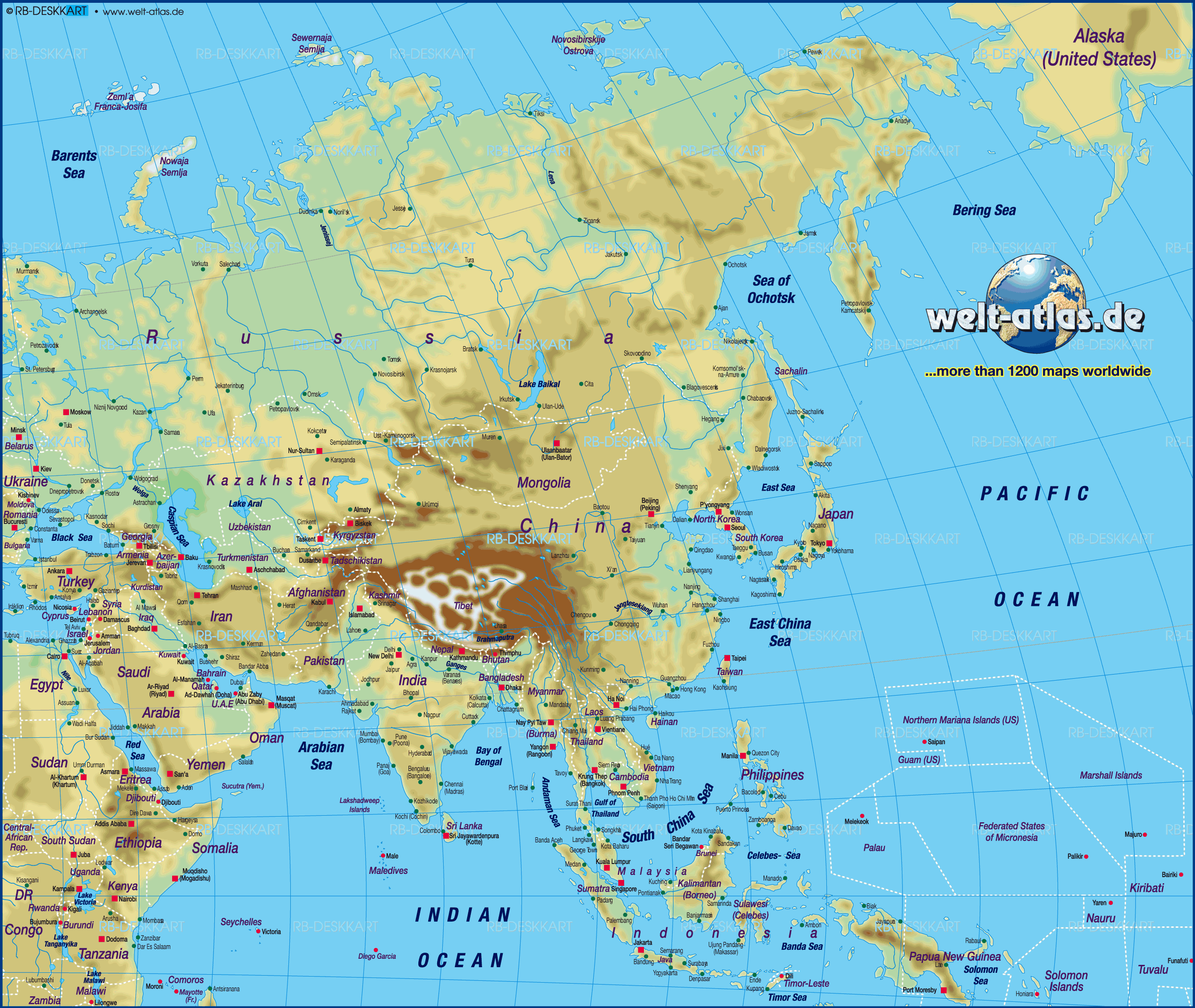
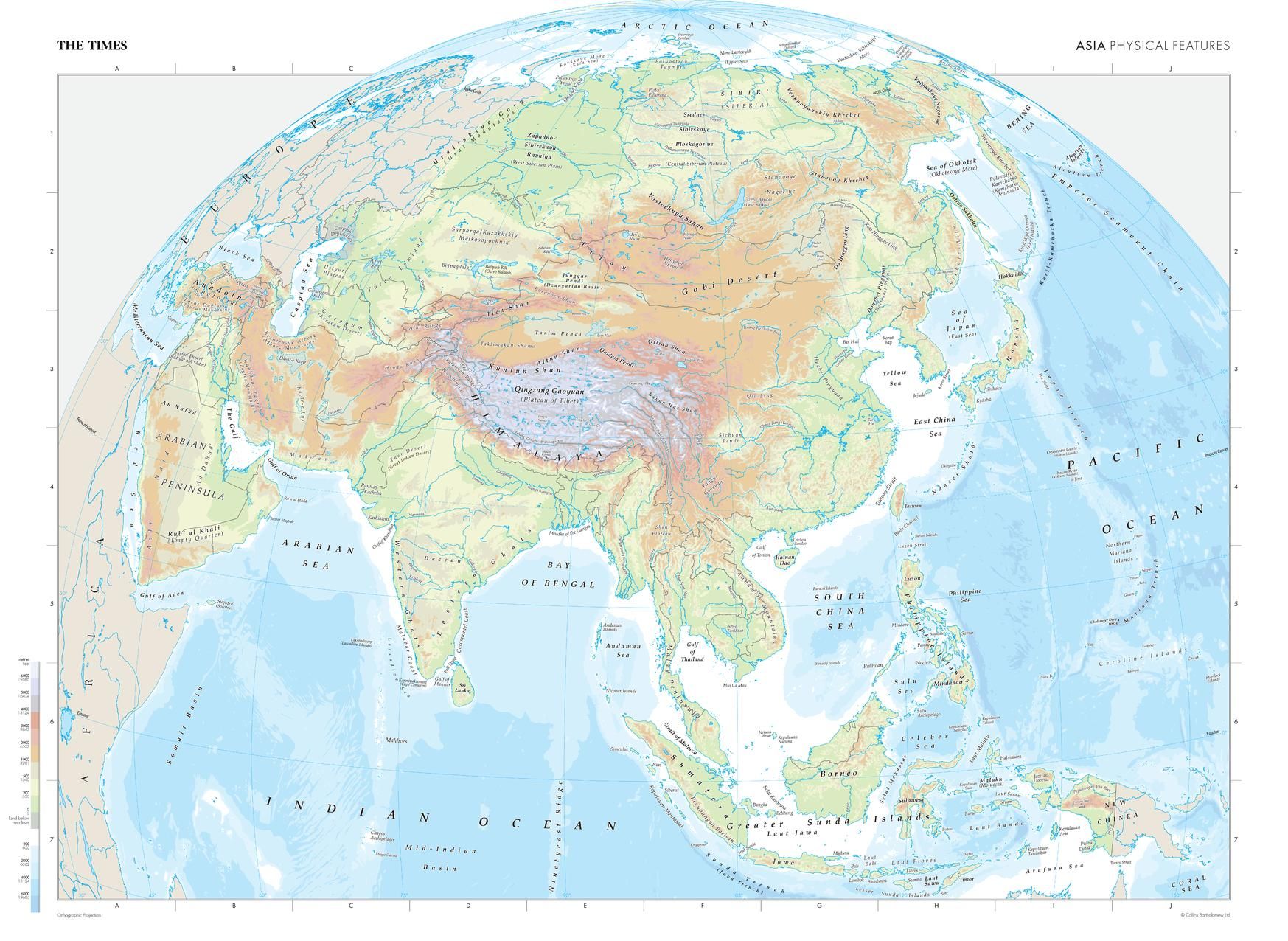
A physical map of Asia reveals an astounding tapestry of diverse landscapes. From the towering Himalayan peaks, home to Mount Everest, to the vast, arid stretches of the Gobi Desert, and the frozen expanses of Siberia, this continent offers incredible geographical variety. Americans interested in global studies, environmental science, or simply planning future adventures find these maps invaluable. Understanding Asia's physical features helps us grasp its complex climates, resource distribution, and the historical movements that shaped civilizations. It is not just about lines on paper; it is a gateway to comprehending the world's largest continent. This navigational tool supports educational pursuits and inspires a deeper appreciation for Earth's natural wonders. Learning about the physical Asia map enhances your geographical knowledge significantly.
What major mountain ranges are on a physical map of Asia?
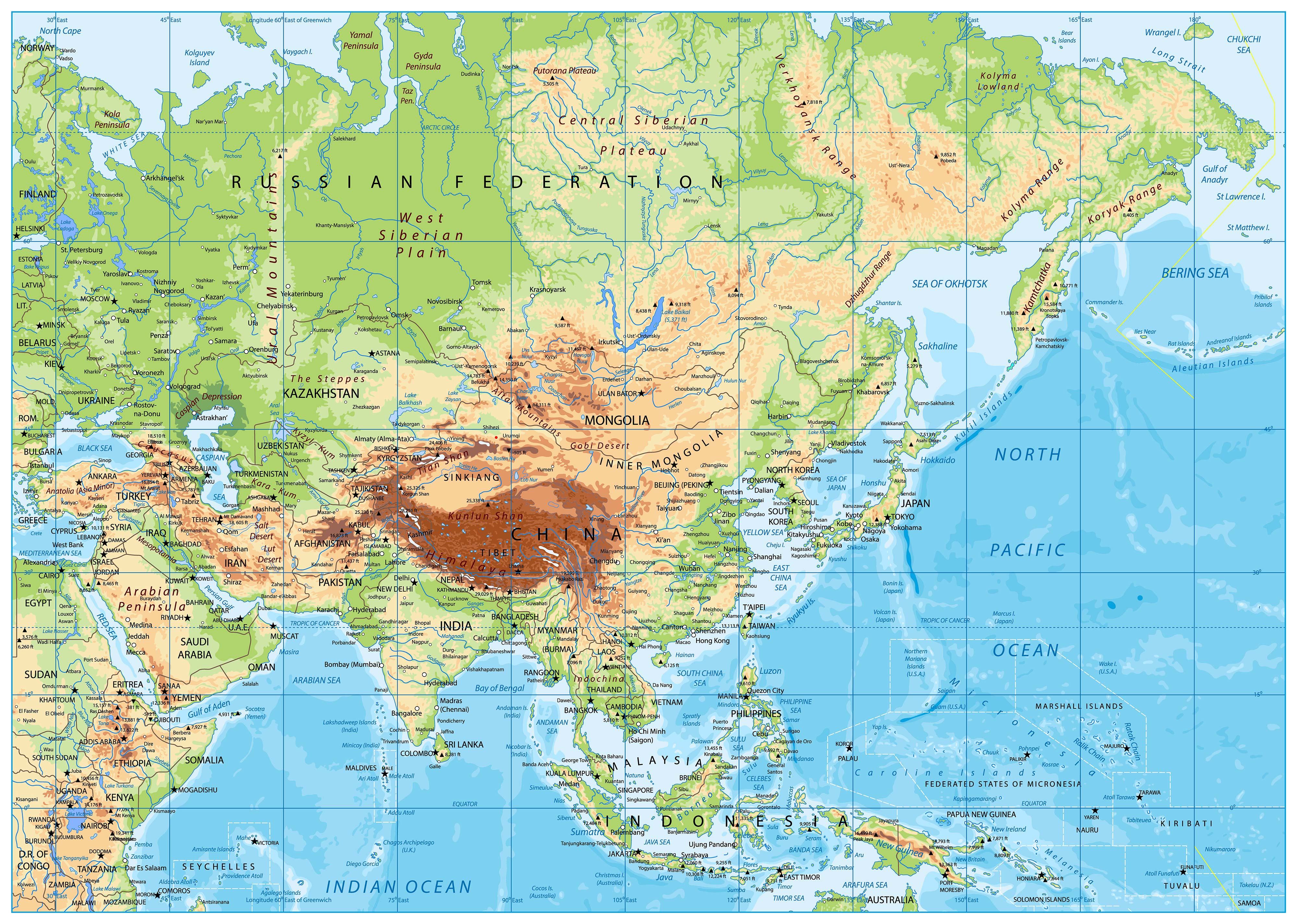
A physical map of Asia features prominent mountain ranges like the Himalayas, home to Mount Everest, the Kunlun Mountains, Tian Shan, and the Ural Mountains which delineate Europe. These colossal formations are central to Asia's climate and biodiversity, shaping regional landscapes and historical development across the continent.
Where are the largest deserts located on a physical Asia map?
The largest deserts on a physical Asia map include the vast Gobi Desert in Central Asia, spanning parts of Mongolia and China, and the expansive Arabian Desert in Southwest Asia. These arid regions, characterized by extreme temperatures and sparse vegetation, are clearly depicted through topographical variations on the map.
Which significant rivers are shown on a physical Asia map?
Significant rivers displayed on a physical Asia map include the Yangtze River, the longest in Asia, the Yellow River in China, and the Mekong River in Southeast Asia. The Ganges and Indus rivers are vital to South Asia, while the Ob, Yenisei, and Lena flow across Siberia, sustaining diverse ecosystems and human populations.
What does a physical map tell us about Asia's elevation?
A physical map clearly illustrates Asia's diverse elevations using color gradients, from sea level plains to the highest mountain peaks. It shows that Central Asia is dominated by high plateaus and towering ranges, while coastal areas tend to be lower. This visual representation helps understand the continent's varied topography.
How do plateaus feature on a physical Asia map?
Plateaus are prominent on a physical Asia map, notably the vast Tibetan Plateau, known as the Roof of the World, in Central Asia. Other significant plateaus include the Iranian Plateau and the Deccan Plateau in India. These elevated, relatively flat landforms play a crucial role in regional climates and geological structure.
Why is the physical geography of Asia so important to study?
Studying the physical geography of Asia is vital because it reveals the foundations of its diverse climates, natural resources, and cultural developments. Understanding features like mountain ranges and rivers helps explain historical migrations, agricultural practices, and environmental challenges. It provides context for global economic and social issues.
Ever wondered about the immense beauty and raw power of Asia's natural world? A physical Asia map is your ultimate guide, visually explaining the continent's incredible mountains, vast deserts, and mighty rivers. It helps us understand where significant geographical features are located, why certain climates exist, and how civilizations have thrived across this diverse land. For anyone in the USA looking to explore global geography, this map offers invaluable insights into the largest and most populous continent.
Understanding the Physical Asia Map
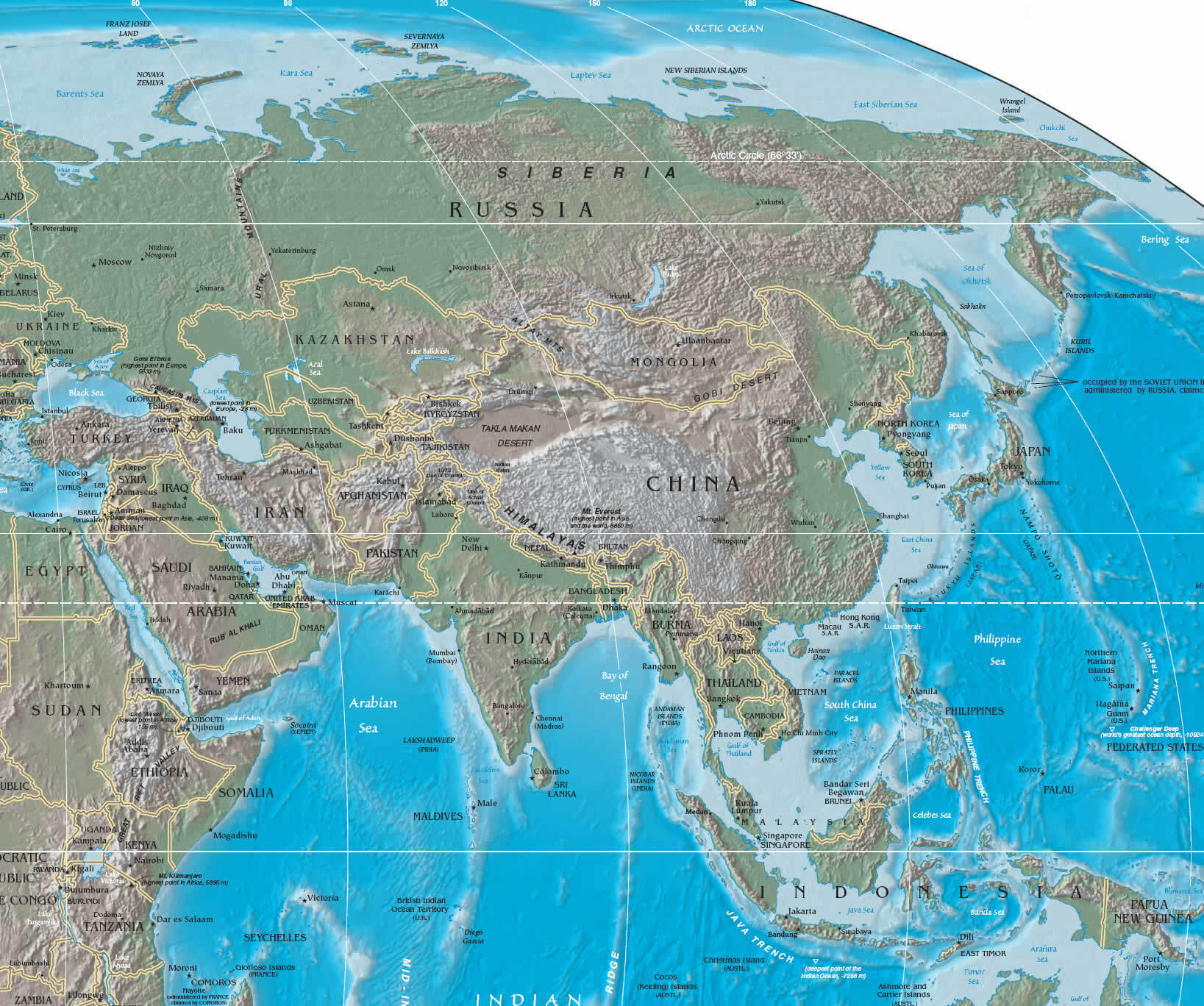
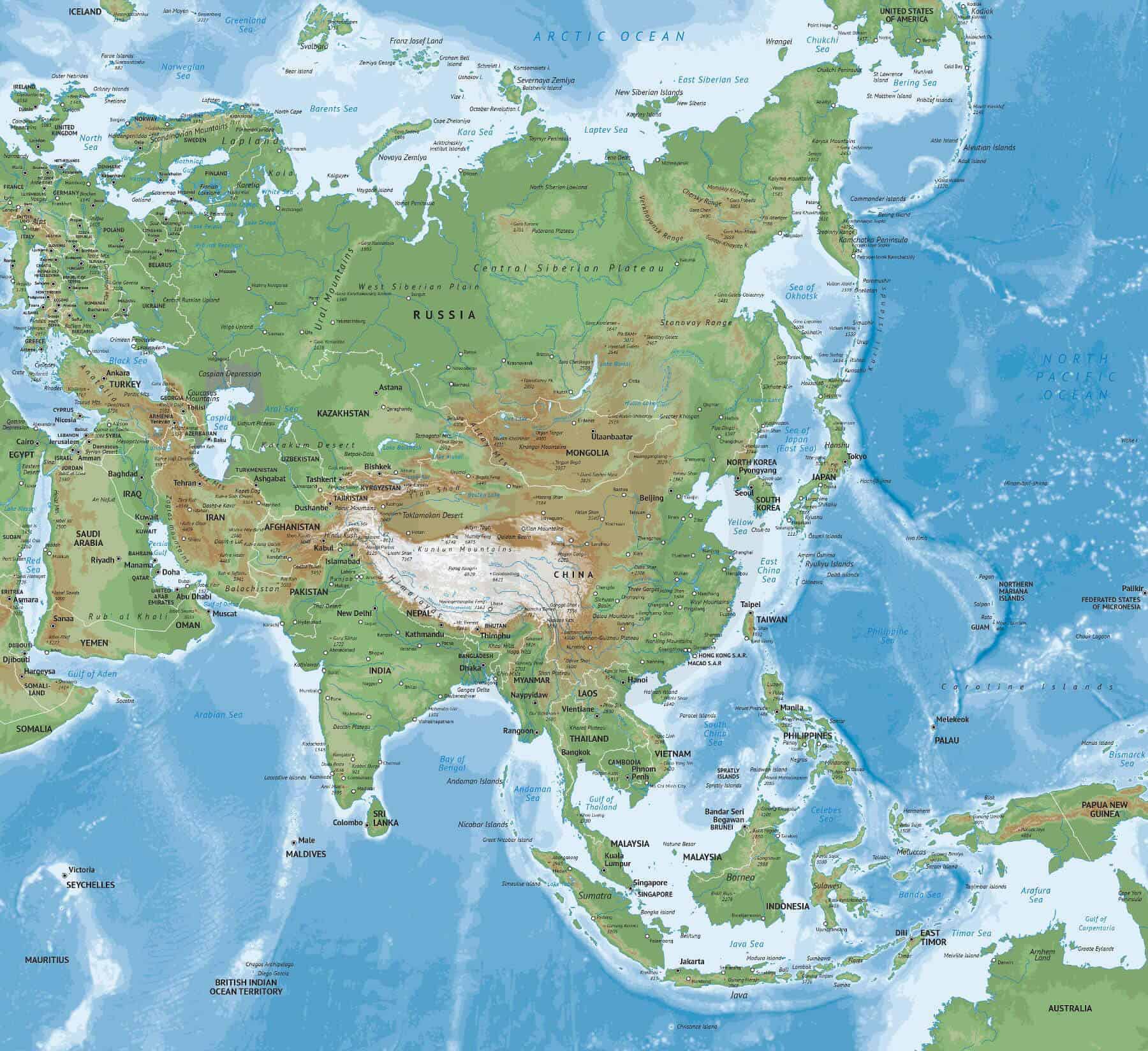
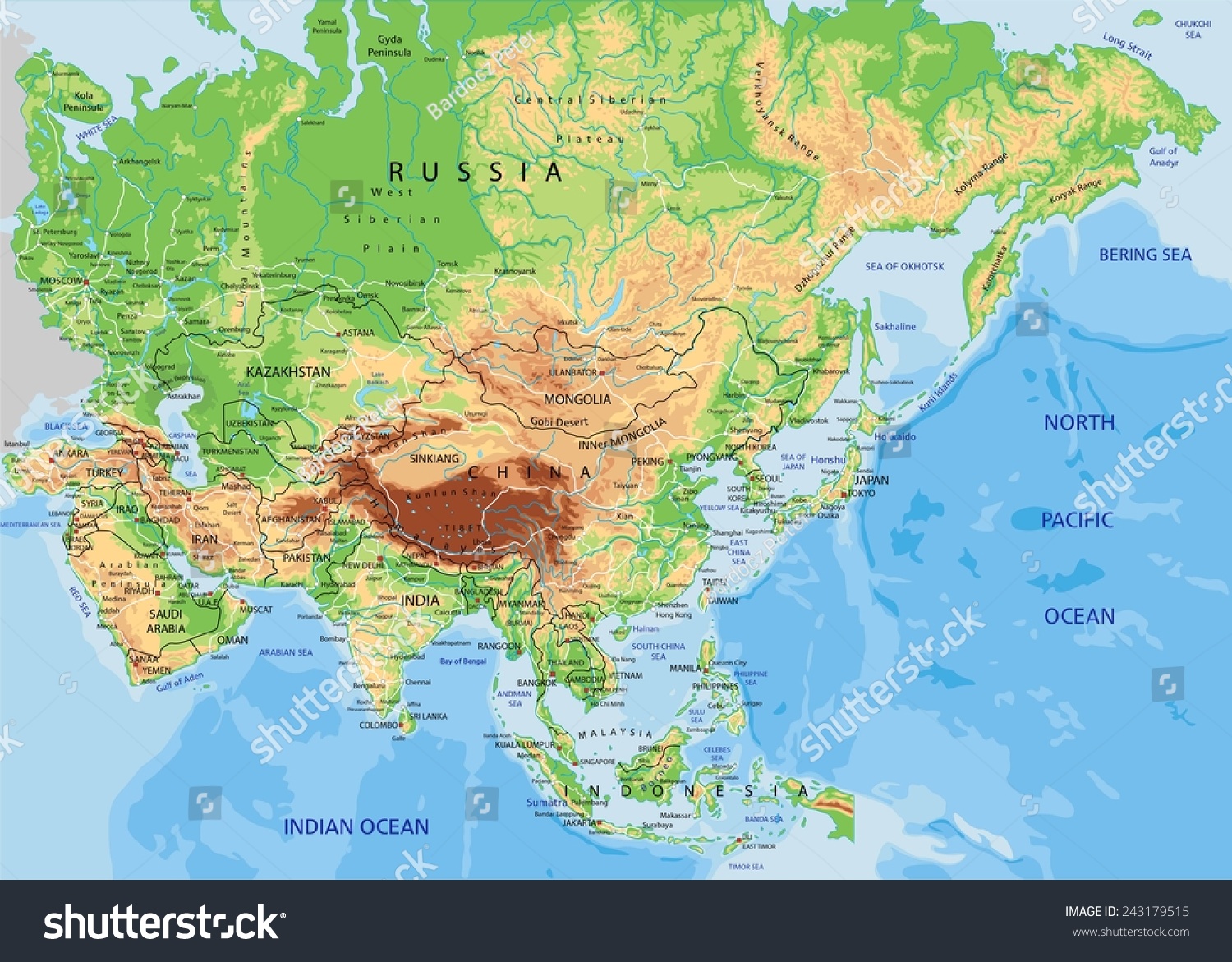
The physical Asia map displays the continent's topography, highlighting elevation changes through various colors and shading. You can easily spot towering mountain ranges like the Himalayas and the Ural Mountains, which form a natural boundary with Europe. These features are crucial for understanding global weather patterns and the distribution of natural resources across Asia.
Majestic Mountain Ranges on the Physical Asia Map
Asia is home to some of the world's highest peaks, dramatically depicted on a physical Asia map. The Himalayas stretch across several nations, boasting Mount Everest, the highest point on Earth. Other significant ranges include the Kunlun Mountains, Tian Shan, and the Caucasus Mountains. These formidable barriers have historically shaped human migration and cultural development.
Deserts and Plateaus of the Physical Asia Map
Venture into Asia's vast interior and you will find immense deserts and plateaus clearly marked on any physical Asia map. The Gobi Desert, a cold desert spanning Mongolia and China, is one of the largest in the world. The Tibetan Plateau, often called the Roof of the World, is another prominent feature, profoundly influencing regional weather.
Rivers and Lakes Across the Physical Asia Map
Lifeblood for millions, Asia's major rivers crisscross the continent, flowing from mountain sources to the seas. The Yangtze River in China, the Yenisei and Lena rivers in Siberia, and the Ganges River in South Asia are all vital waterways. A physical Asia map shows their intricate networks, essential for agriculture, transportation, and human settlements.
Key Geographical Features of the Physical Asia Map
| Feature | Description | Location on Physical Asia Map |
| Mount Everest | World's highest peak | Himalayas, Nepal/China border |
| Gobi Desert | Large cold desert | Mongolia, Northern China |
| Yangtze River | Longest river in Asia | China |
| Tibetan Plateau | Roof of the World | Central Asia |
| Ural Mountains | Boundary between Europe and Asia | Western Russia |
What Others Are Asking about the Physical Asia Map?
What are the main physical features of Asia?
The main physical features of Asia include towering mountain ranges like the Himalayas, vast deserts such as the Gobi, extensive plateaus like Tibet, and major river systems including the Yangtze and Ganges. Coastal plains and numerous archipelagos also define the continent's diverse landscape on a physical Asia map.
Where is Mount Everest located on a physical map of Asia?
Mount Everest is prominently located within the Himalayan mountain range on a physical map of Asia. It straddles the border between Nepal and China (specifically, the autonomous region of Tibet). Its exact elevation of 29,032 feet is often noted near its peak.
What is the largest desert in Asia?
The largest desert in Asia is the Gobi Desert, a vast cold winter desert spanning parts of northern China and southern Mongolia. It is clearly visible on a physical Asia map due to its expansive, arid terrain. The Arabian Desert is another significant hot desert in the continent's southwest.
Which major rivers flow through Asia?
Several major rivers flow through Asia, critical for various civilizations. Key examples include the Yangtze River, Yellow River, and Mekong in East and Southeast Asia. In South Asia, the Ganges and Indus Rivers are vital, while the Yenisei, Lena, and Ob rivers dominate Siberia, all marked on a physical Asia map.
Why is Asia's geography so diverse?
Asia's geography is incredibly diverse due to its immense size and its position spanning multiple tectonic plates. This geological activity has created dramatic mountain ranges, deep valleys, and extensive plateaus. Varying latitudes also contribute to diverse climates, from tropical rainforests to arctic tundras, evident on a physical Asia map.
How does the physical geography of Asia influence its climate?
The physical geography of Asia profoundly influences its climate through the presence of major mountain ranges and large landmasses. The Himalayas block moisture, creating arid regions to their north and monsoons to their south. Vast continental interiors experience extreme temperature swings, shaping diverse climate zones visible on a physical Asia map.
FAQ about the Physical Asia Map
What is a physical Asia map?
A physical Asia map is a cartographic representation showcasing the natural geographic features of the Asian continent. It highlights mountains, rivers, deserts, plains, and elevations using color and shading, offering a clear visual understanding of the terrain.
Why is understanding the physical Asia map important?
Understanding the physical Asia map is important for grasping global geography, historical migration patterns, and current geopolitical dynamics. It reveals how natural barriers and waterways have shaped cultures, economies, and environmental conditions across the continent.
How can a physical Asia map benefit travelers?
A physical Asia map can greatly benefit travelers by helping them visualize terrain for route planning and adventure selection. It allows them to identify key natural attractions, understand elevation challenges, and anticipate climate variations across different regions of Asia.
Who uses physical Asia maps?
Students, educators, environmentalists, geologists, travelers, and anyone with a general interest in global geography utilize physical Asia maps. They serve as essential tools for learning, research, and planning to explore the vast and varied landscapes of Asia.
In summary, the physical Asia map is a powerful tool for exploring the vast and varied landscapes of the world's largest continent. It visually details everything from the towering Himalayas to the sprawling Gobi Desert and life-giving rivers. This map is crucial for education, travel, and understanding how geography shapes life in Asia. We encourage everyone to discover the natural wonders it reveals.
physical asia map showcases mountains, deserts, rivers, and diverse terrains. It helps understand Asia's climate, history, and resources. Essential for education and travel planning.
35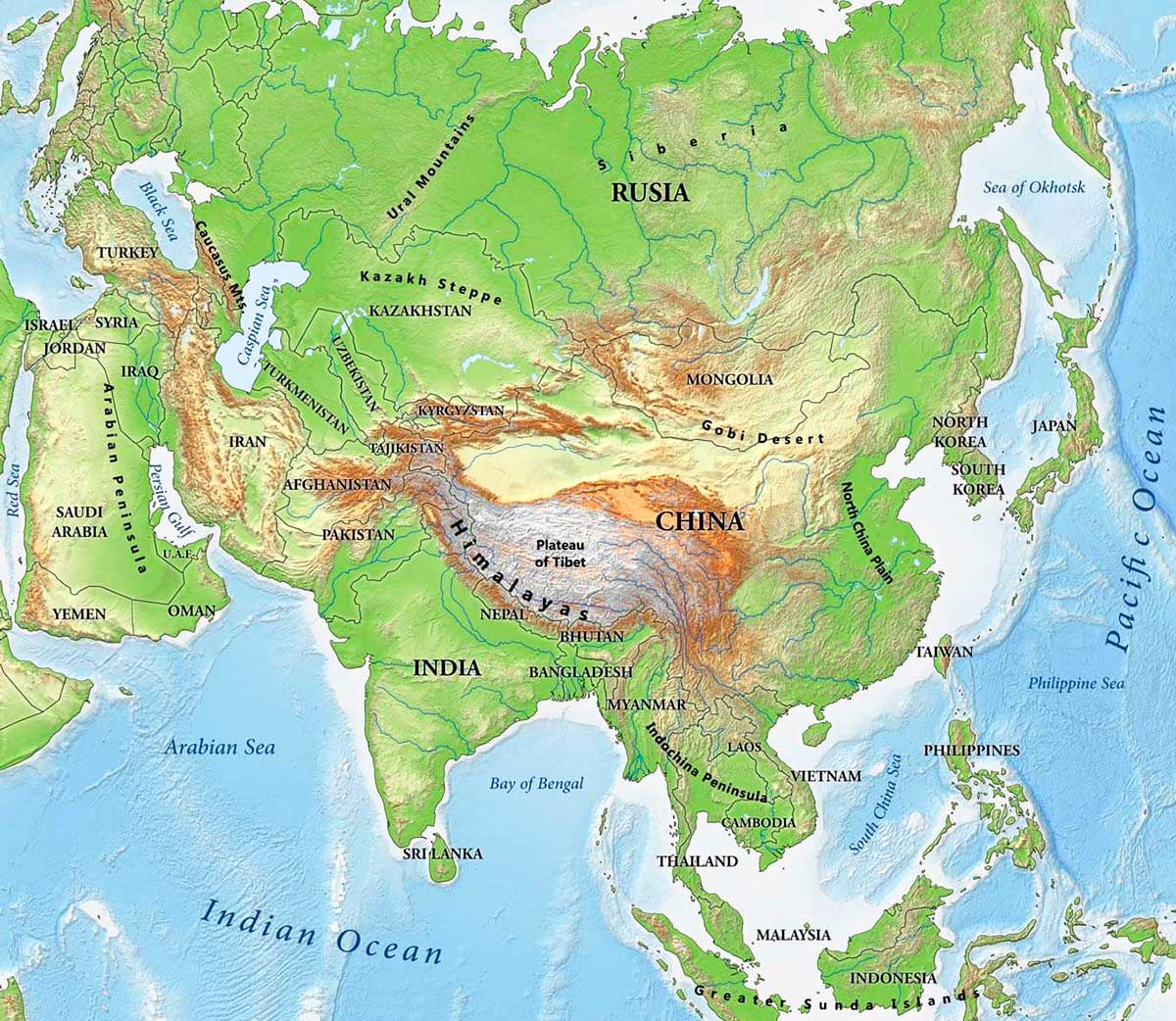
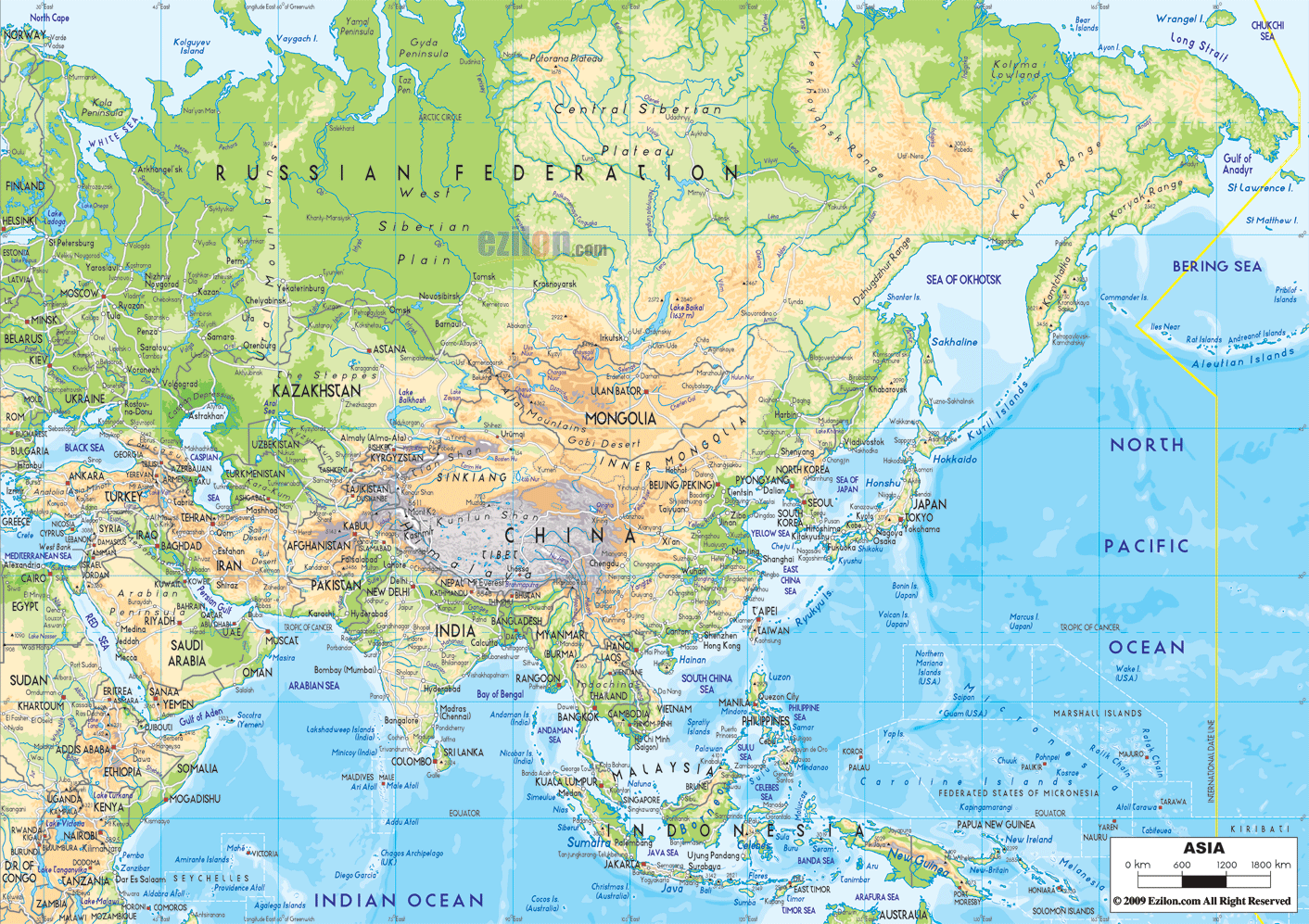
Budget 2026 Date Malaysia Map In Asia Mapa Asia Fisico . Physical Map Of Asia Asia Physical Map . Physical Map Of Asia 751 Asia Naturalist Vm Natasia 9v2mo 1 Web . High Detailed Asia Physical Map Labeling Stock Vector 243179515 Stock Vector High Detailed Asia Physical Map With Labeling 243179515 . Physical Map Of Asia Ezilon Maps Asia Physical Map
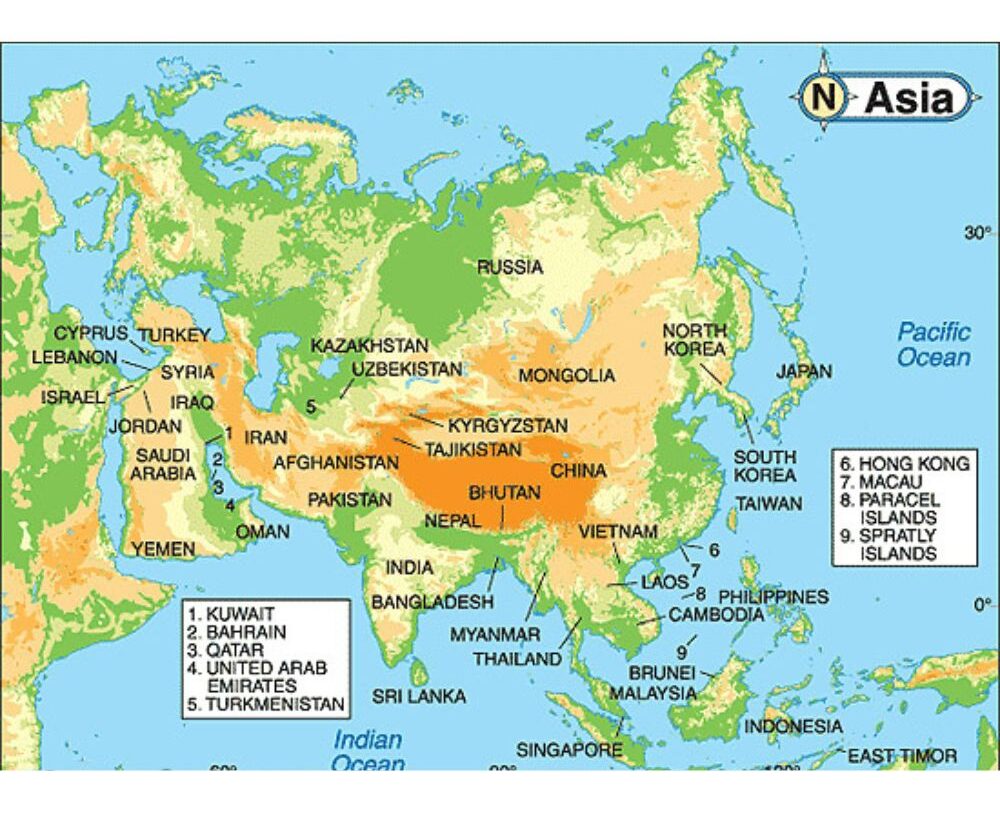
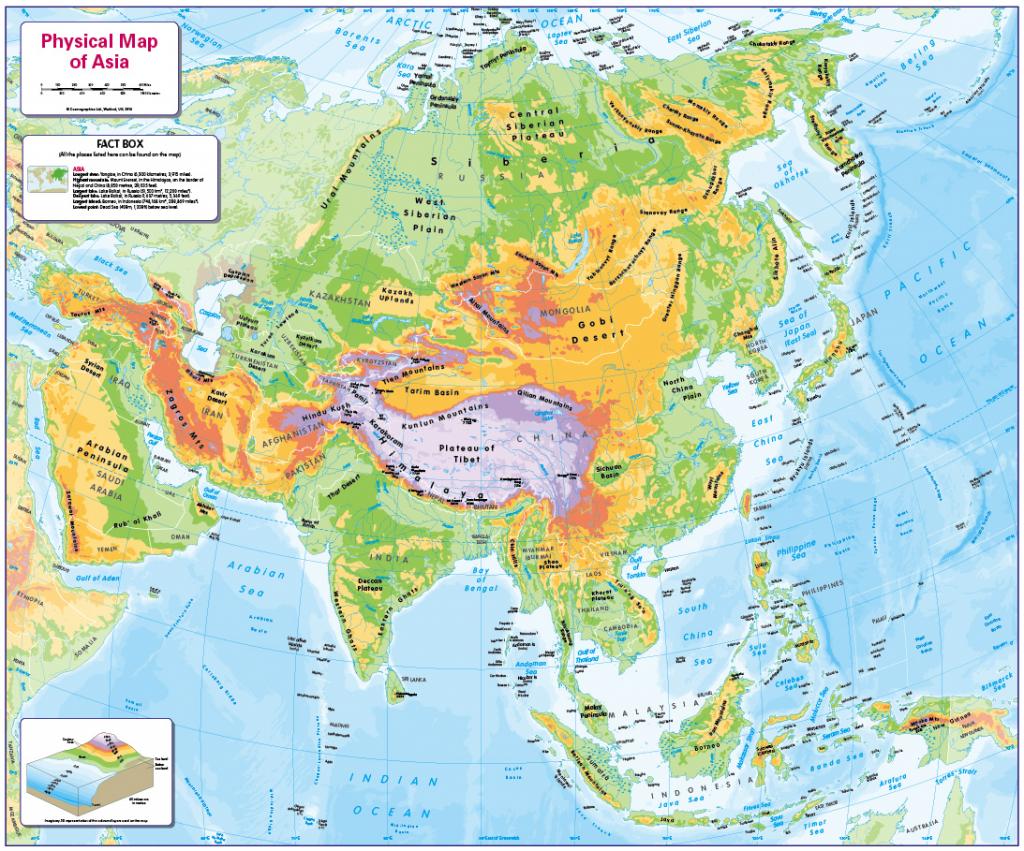

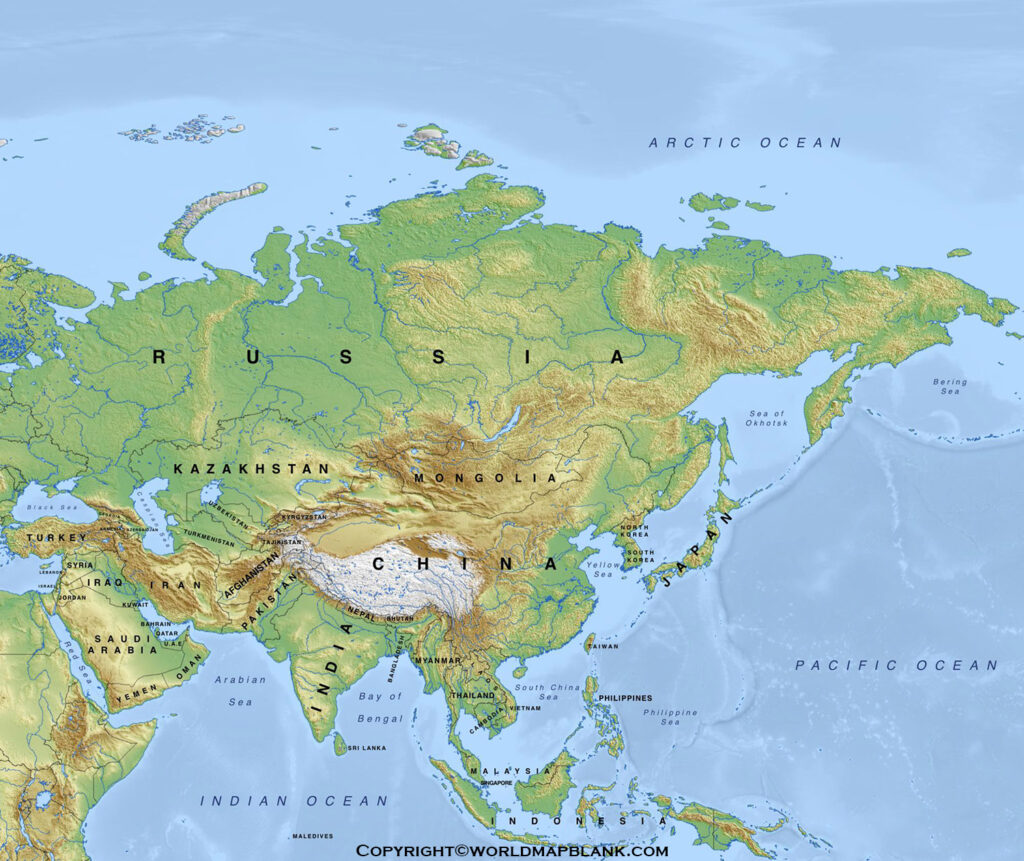

Asia Physical Map Mountains Rivers Landforms Printable Asia Physical Map . Physical Asia Map Childrens Physical Map Of Asia758 0961 Newcopy . Asia Physical Outline Maps Geography Asia Physical Map . Printable Asia Physical Map Map Of Asia Physical World Map Blank Map Of Asia Physical 1024x861 . Asia Physical Map Physical Map Of Asia


Asia Physical Map PDF 1704308150. Asia Physical Map Asia Physical . Asia Physical Outline Maps Geography Asia Wall Map Physical Ct00407 . Physical Map Of Asia Asia Physical Map . Asia Physical Map Net Asia
Physical Map Of Asia Com Physical Map Of Asia Max . Asia Map Asia Physical Map . Physical Map Of Asia Continent As Physical Map Asia Robinson 267 . Asia Physical Map Mapsof Net Asia Physical Map . Physical Map Of Asia Vector Com 76465834 Physical Asia Map Country Boundaries Country Capitals River Courses Names Main Features Earth See 80885750
Asia Physical Map Labeled Map Physical . Physical Maps Asia Asia Physical Map School And Asia Physical Atlas Of The World 11th Edition . Physical Map Of Asia Physical Map Asia Highly Detailed Vector Format All Relief Forms 76465834 . Physical Maps Asia High Detailed Asia Physical Map 2BW38XW . Top 28 Pictures Physical Map Of Russia And Central Asia Stunning Karte 0 9029 En


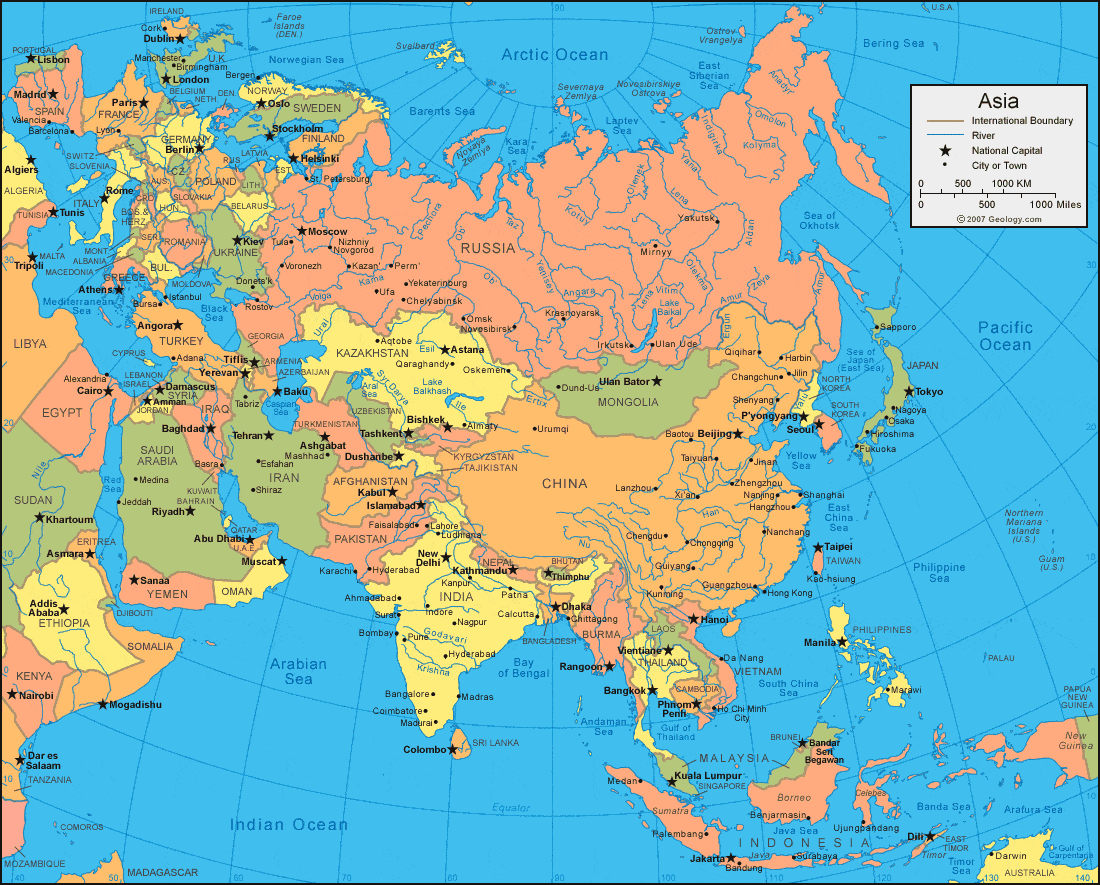
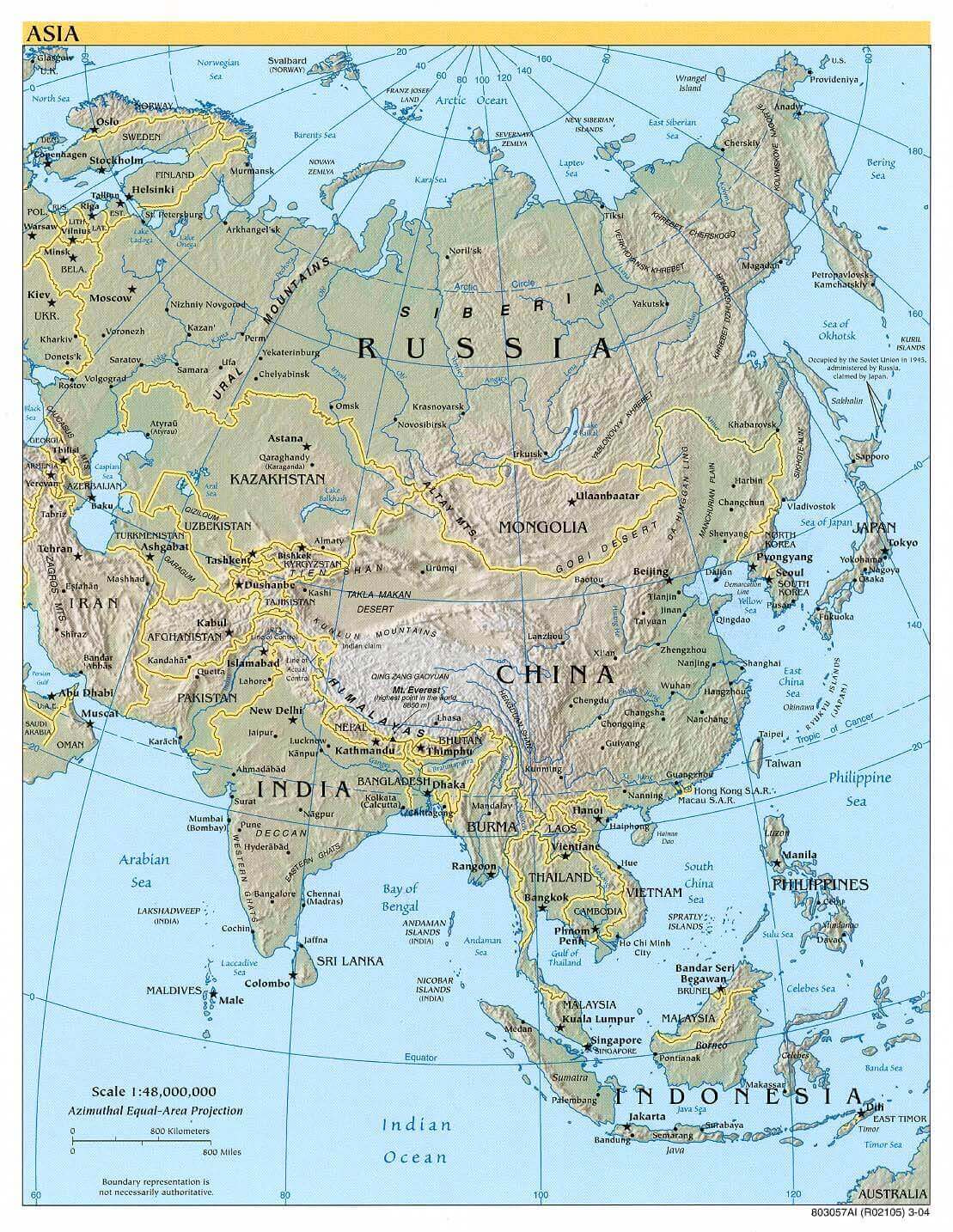
Asia Physical Map Deserts History East Asia Physical Geography Diagram The Times Map Of Asia Physical Features . Asia Physical Map Blank The Shalevs Cropped Asia Physical Map Blank 1 . Asia Physical Classroom Map Wall Mural From Academia And Asia Map . Physical Map Of Asia Asia Map . Explore Asia Physical Map Asia Physical Map 2004
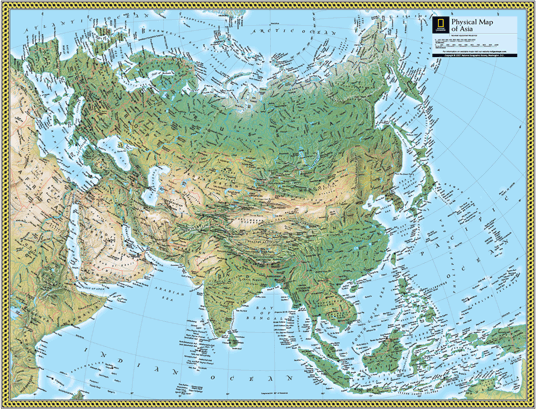
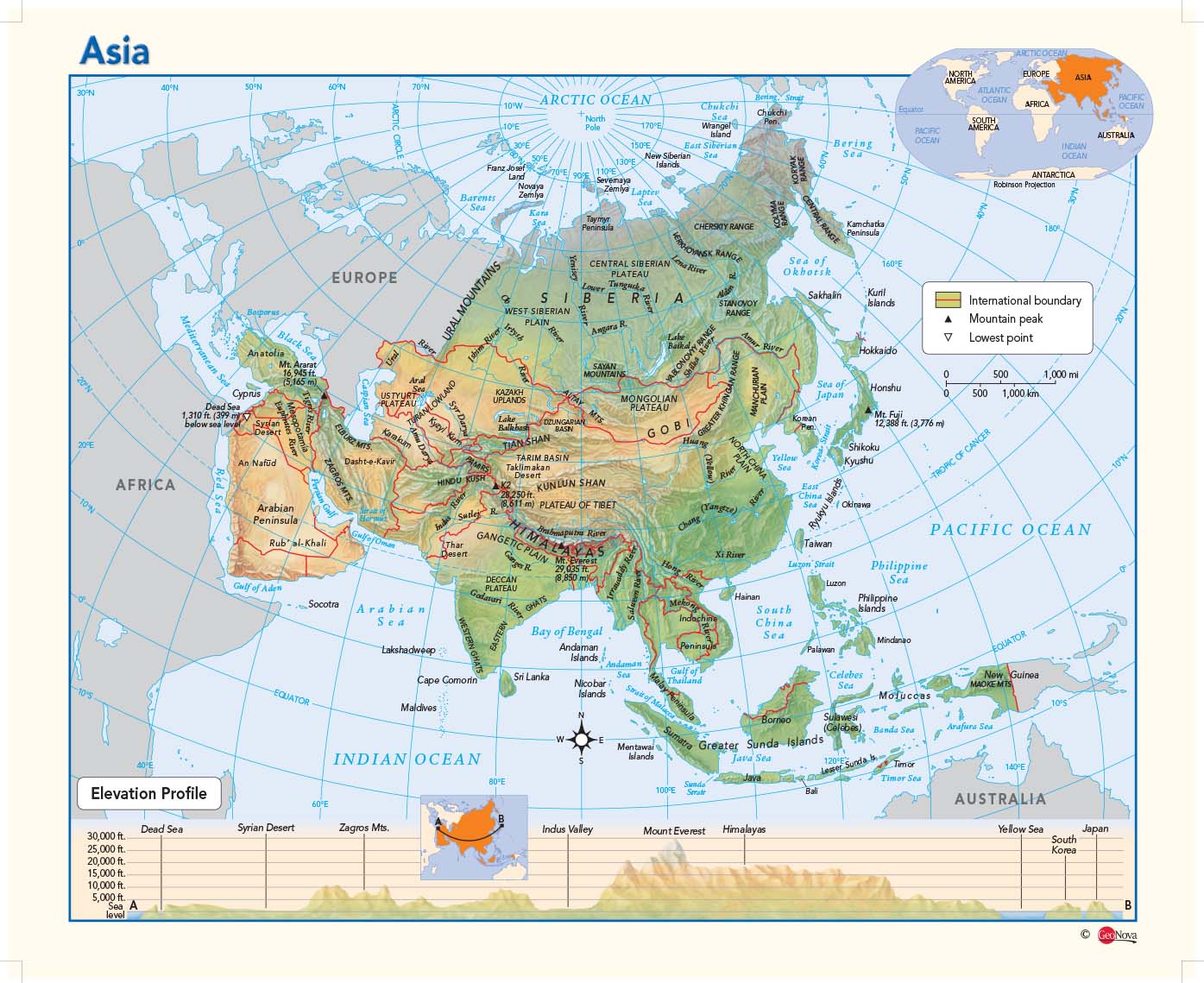

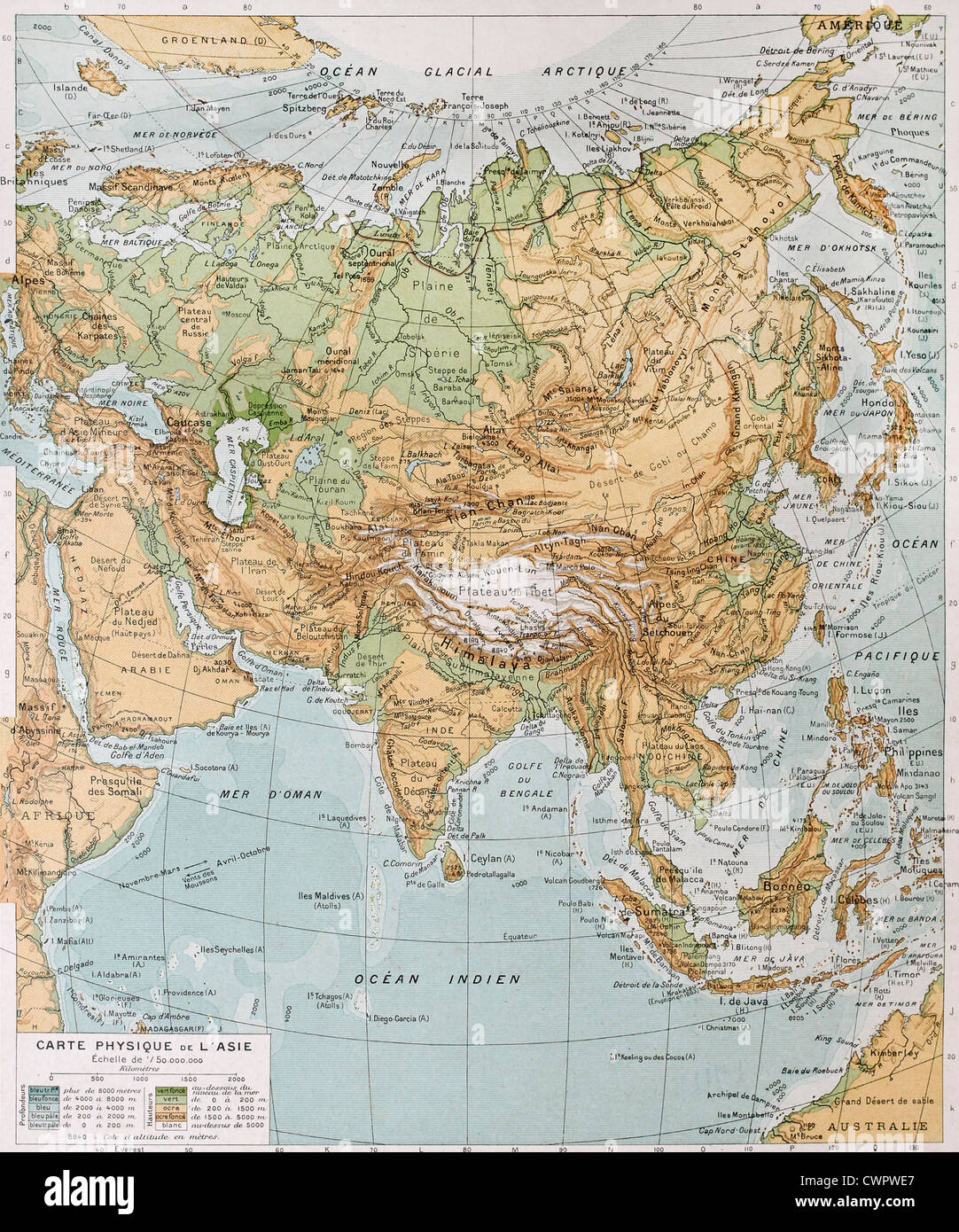
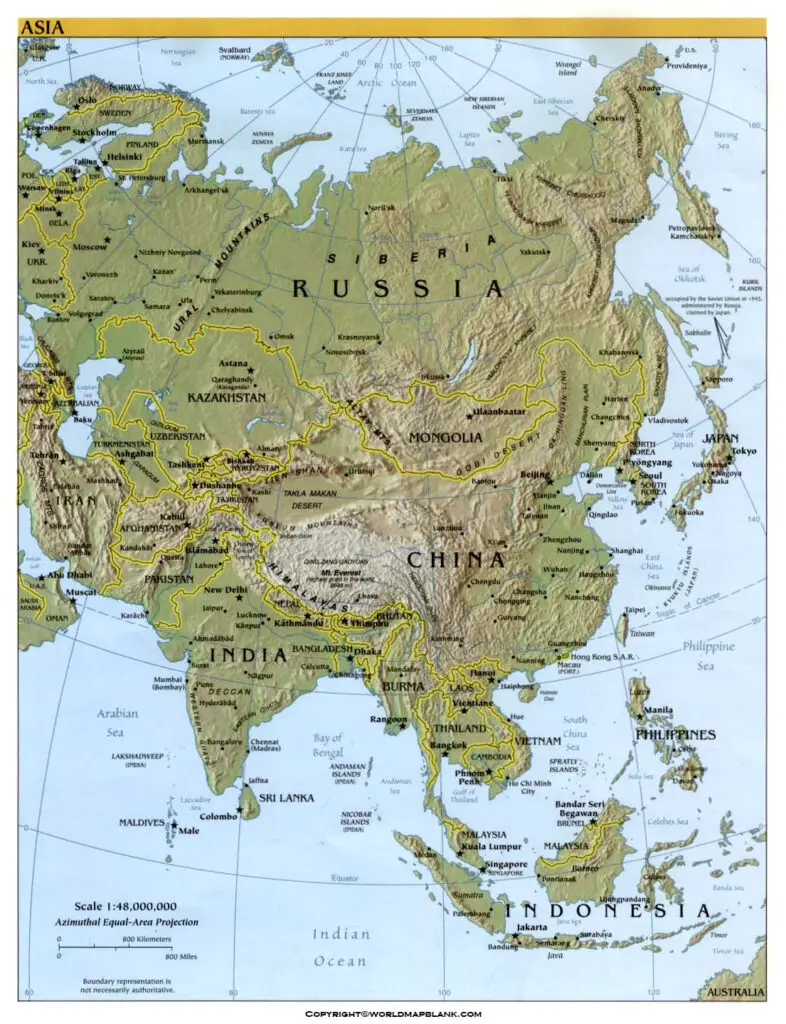
Labeled Physical Map Of Asia Asia Physical . Labeled Physical Map Of Asia Asia Physical Apr07 . Asia Map With Physical Features Physical Map Of Asia . Physical Map Of Asia Asia Physical Map CWPWE7 . Printable Asia Physical Map Map Of Asia Physical World Map Blank Physical Map Of Asia 786x1024